
';
?>
';
?>
We feel devotion
DataCenter
NEW ENTRY
New Entry — First Recap
Two rounds into this season’s EuroLeague, and it’s time to draw some early conclusions—fully aware many of them will get overturned as we go.
Published: 07/10/2025 20:59
This year’s long-awaited Fantasy tipoff arrived with a twist: a double round “devil week.” Using what we’ve seen across those first two rounds, I’ll recap how we did and sketch a first draft of our next moves.
This is a new BasketStories kind of experiment: after each round (or each double week), we’ll post a broad recap of the New Entry team — what worked, what didn’t — and outline early plans, updating our takeaways and, as far as possible, setting a strategic direction for the coming rounds. Hope you like the format — feel free to jump in with thoughts on the site or on X.
Round 1, as noted, was friendly to Fantasy managers—a polite welcome. Round 2, though, reminded us in the bluntest way that the game is much tougher now and demands close study of the data and sound judgment in weighing it.
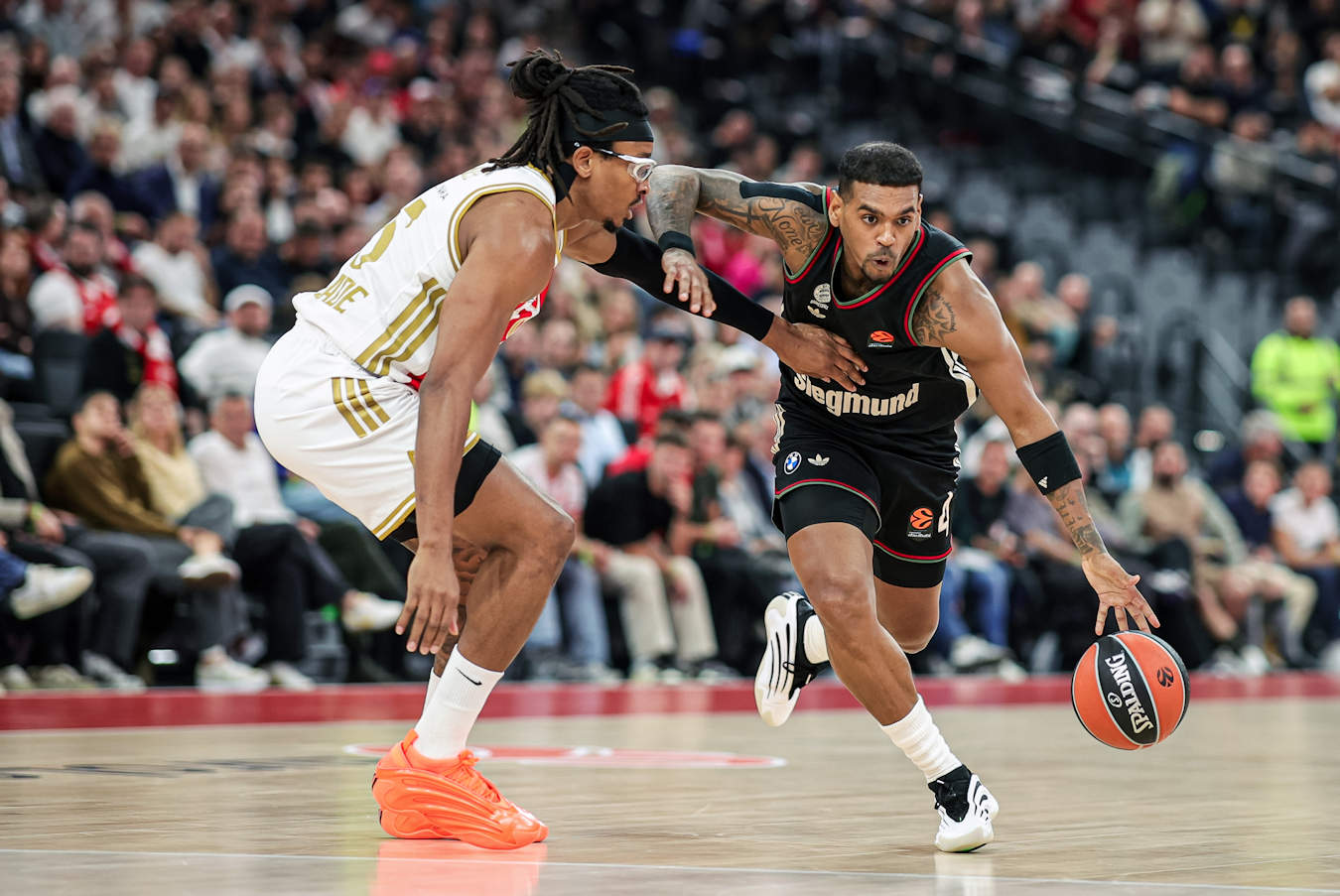
For my squad, Round 2 essentially swung on two bad calls. The first was bringing in Rathan-Mayes—a planned move I’d flagged before—because we expected him to be Bayern’s new backcourt lead (a continuation of Edwards/Weiler-Babb), driving ranking on a team that plays fast and piles up possessions. Instead, he met expectations in the very game we feared (at OAKA) and disappointed at home—despite Bayern scoring 97 with a team PIR of 103—finishing at -2. If that one burned a lot of managers, the Kattash pick at coach was outright disastrous.
After Round 1 I wrote that team strength was still very fuzzy and early reads could be misleading. I trusted Maccabi: competitive the last two seasons, a strong summer of moves, roster in place early. We also expected Paris to be limited to start—new roster, likely undercooked. In the end, the fact the margin dipped under 10 was actually flattering to how Maccabi looked.
Lucic was disappointing as well, while Hall, Forrest, Osmani, and to a lesser extent Wright kept the total from falling apart.
Zooming out: as expected, top-priced guards are, in many cases, mispriced—anchored to last year’s status, not this year’s realities. It was never likely that Shorts, Edwards, Maledon (injured anyway) would simply replicate last season. The one premium guard who made sense was Nunn, hence his popularity. Personally I had high hopes for Hall and especially Baldwin at Fener—post Hayes-Davis, Guduric, McCollum, they’d carry more load until the NBA arrivals settle in. They both showed why their tags were among the best at price. Trent Forrest also looks good; with Red Star’s injuries, Miller-McIntyre too. Dorsey has started great, and De Larrea belongs on every roster at his cost. I expect Partizan’s guards to matter as the season matures. Bottom line: the guard market is tricky this year—fewer old “locks.” We need to monitor closely until the picture clears.
At forward, there are quality options across the price ladder. Up top, Mirotic, Vezenkov, LeDay, Hoard, Petrusev are Fantasy staples (accepting that some early-schedule winners will normalize). In the mid tier—Sedekerskis, Nwora, Sorkin, Bonga—and among value plays (Osmani, Parra), you’ll find pieces that should outperform price over time. Right now, forwards look like the most promising market—worth investing in.
At center—a headache last year that often forced a 4-credit placeholder—choices are fewer but genuinely strong: Milutinov, Wright, Oturu, Theis, Kabengele, Nebo. Not cheap, but with guards thin, allocating real budget to the 5 may be the right call. I see center as pivotal to team performance.
Finally, at coach—to avoid blowups like Kattash (and, this round, Ataman)—we should side with clear favorites when they exist. This round, Scariolo fits that brief. One more reminder: current team “strength” is not what it will be. Several clubs are debutants or radically retooled; prep cycles, national-team workloads, and fitness have all skewed early form. Week by week, study late news and ride momentum windows when they appear.
Thoughts welcome at newentry@basketstories.net
or on X: @NewEntryIlias.
This is a new BasketStories kind of experiment: after each round (or each double week), we’ll post a broad recap of the New Entry team — what worked, what didn’t — and outline early plans, updating our takeaways and, as far as possible, setting a strategic direction for the coming rounds. Hope you like the format — feel free to jump in with thoughts on the site or on X.
Round 1, as noted, was friendly to Fantasy managers—a polite welcome. Round 2, though, reminded us in the bluntest way that the game is much tougher now and demands close study of the data and sound judgment in weighing it.
For my squad, Round 2 essentially swung on two bad calls. The first was bringing in Rathan-Mayes—a planned move I’d flagged before—because we expected him to be Bayern’s new backcourt lead (a continuation of Edwards/Weiler-Babb), driving ranking on a team that plays fast and piles up possessions. Instead, he met expectations in the very game we feared (at OAKA) and disappointed at home—despite Bayern scoring 97 with a team PIR of 103—finishing at -2. If that one burned a lot of managers, the Kattash pick at coach was outright disastrous.
After Round 1 I wrote that team strength was still very fuzzy and early reads could be misleading. I trusted Maccabi: competitive the last two seasons, a strong summer of moves, roster in place early. We also expected Paris to be limited to start—new roster, likely undercooked. In the end, the fact the margin dipped under 10 was actually flattering to how Maccabi looked.
Lucic was disappointing as well, while Hall, Forrest, Osmani, and to a lesser extent Wright kept the total from falling apart.
Zooming out: as expected, top-priced guards are, in many cases, mispriced—anchored to last year’s status, not this year’s realities. It was never likely that Shorts, Edwards, Maledon (injured anyway) would simply replicate last season. The one premium guard who made sense was Nunn, hence his popularity. Personally I had high hopes for Hall and especially Baldwin at Fener—post Hayes-Davis, Guduric, McCollum, they’d carry more load until the NBA arrivals settle in. They both showed why their tags were among the best at price. Trent Forrest also looks good; with Red Star’s injuries, Miller-McIntyre too. Dorsey has started great, and De Larrea belongs on every roster at his cost. I expect Partizan’s guards to matter as the season matures. Bottom line: the guard market is tricky this year—fewer old “locks.” We need to monitor closely until the picture clears.
At forward, there are quality options across the price ladder. Up top, Mirotic, Vezenkov, LeDay, Hoard, Petrusev are Fantasy staples (accepting that some early-schedule winners will normalize). In the mid tier—Sedekerskis, Nwora, Sorkin, Bonga—and among value plays (Osmani, Parra), you’ll find pieces that should outperform price over time. Right now, forwards look like the most promising market—worth investing in.
At center—a headache last year that often forced a 4-credit placeholder—choices are fewer but genuinely strong: Milutinov, Wright, Oturu, Theis, Kabengele, Nebo. Not cheap, but with guards thin, allocating real budget to the 5 may be the right call. I see center as pivotal to team performance.
Finally, at coach—to avoid blowups like Kattash (and, this round, Ataman)—we should side with clear favorites when they exist. This round, Scariolo fits that brief. One more reminder: current team “strength” is not what it will be. Several clubs are debutants or radically retooled; prep cycles, national-team workloads, and fitness have all skewed early form. Week by week, study late news and ride momentum windows when they appear.
Thoughts welcome at newentry@basketstories.net
or on X: @NewEntryIlias.


